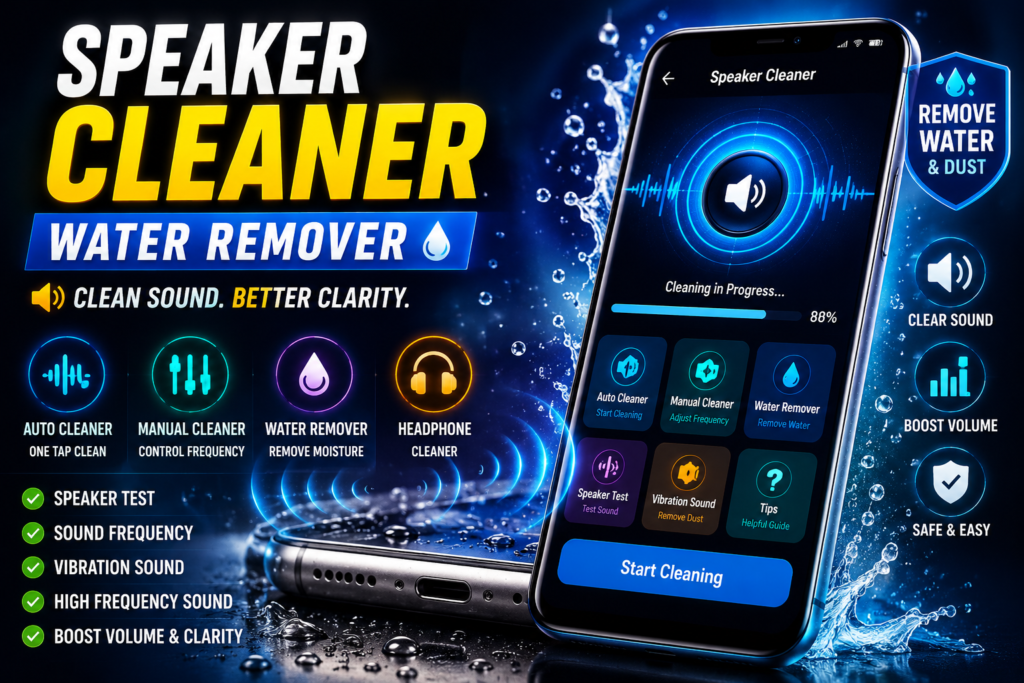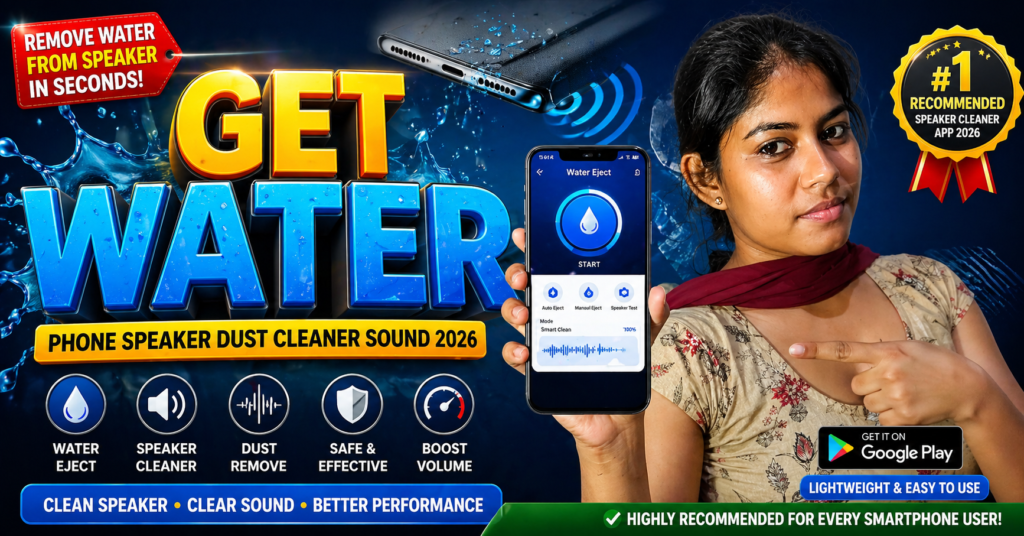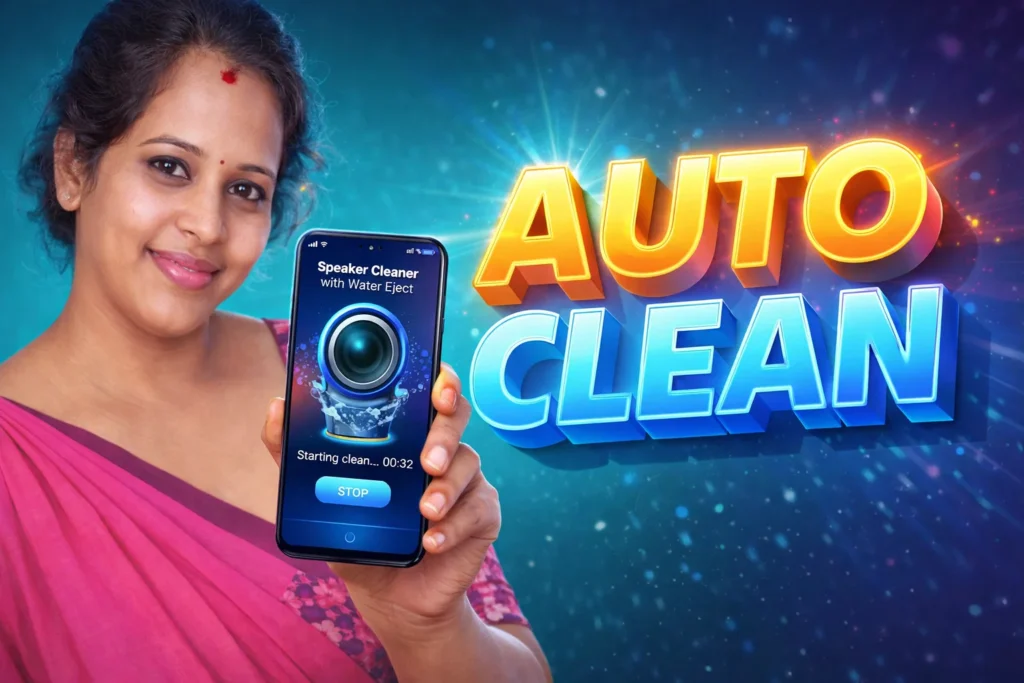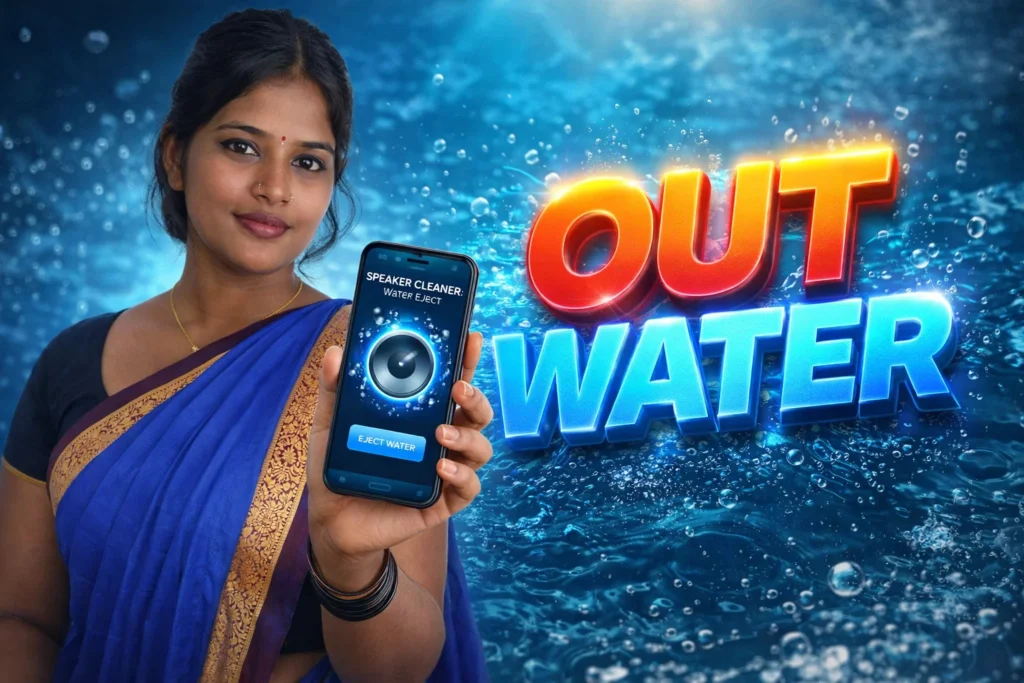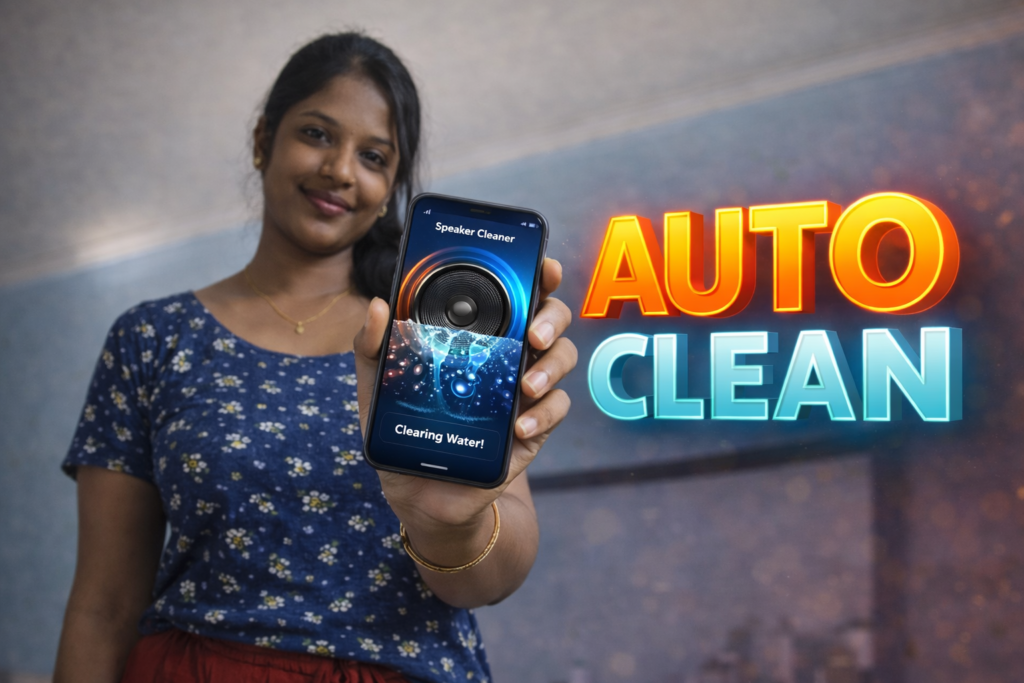
Smartphone speakers are used every day—for calls, voice notes, music, videos, alarms, and navigation. Over time, many users notice that sound becomes softer, distorted, or uneven. This usually happens after exposure to dust, moisture, sweat, or accidental water contact. In such situations, users often search for quick fixes and come across tools known as Speaker Cleaner apps. In 2026, these apps are widely used, but many people still misunderstand what they actually do, how effective they are, and when they should or should not be used.
Understanding this clearly helps avoid unrealistic expectations and potential misuse.
Table of Contents
Quick Overview
| Aspect | Summary |
|---|---|
| App type | Speaker cleaning and sound vibration utility |
| Primary purpose | Help clear water or dust from phone speakers |
| Works on | Android devices |
| Cleaning method | Sound frequency and vibration |
| Physical repair | Not possible |
| Risk level | Low when used properly |
What a Speaker Cleaner app is actually used for
A Speaker Cleaner app is designed to help push out trapped water or fine dust from smartphone speakers using controlled sound waves. It does not open the phone or physically clean components. Instead, it relies on vibration caused by specific audio frequencies.
Common real-world situations where people use these apps:
- After rain exposure or water splashes
- After washing hands while holding the phone
- When sound feels muffled or uneven
- When speaker volume drops suddenly without damage
These apps are meant for minor, recent issues, not for long-term hardware problems.
How Speaker Cleaner apps work (step-by-step)
Step 1: Sound frequency generation
The app plays a tone, usually in a low-frequency range, designed to create strong vibration.
Step 2: Speaker vibration
As the sound plays, the phone speaker vibrates more intensely than during normal audio playback.
Step 3: Water or dust movement
The vibration helps shake out small water droplets or loose dust particles from the speaker grille.
Step 4: Repeated cycles
Most apps allow repeating the process multiple times for better results.
Step 5: Manual testing
Users test the speaker sound afterward to check improvement.
Important: This process works best soon after exposure, not days or weeks later.
What Speaker Cleaner apps cannot do
It is important to understand the limitations clearly.
They cannot:
- Repair damaged or torn speakers
- Remove hardened dirt or debris
- Fix corrosion caused by long-term moisture
- Improve speaker quality beyond original hardware limits
They can:
- Help remove trapped water
- Restore normal sound after minor exposure
- Reduce muffled audio caused by moisture
These apps are preventive and corrective, not repair tools.
Safety, privacy, and permission considerations
Speaker Cleaner apps are generally low risk, but users should still be cautious.
Typical permissions
- Audio playback
- Basic app access
What to check before use
- No access to contacts, storage, or messages
- No unnecessary background services
- Clear explanation of how sound frequencies are used
Red flags
- Claims of “hardware repair”
- Mandatory sign-ups
- Aggressive ads during cleaning
In 2026, well-designed apps remain simple and transparent.
Daily-life usage scenarios
Speaker Cleaner apps are most useful in everyday, accidental situations:
- Phone exposed to rain while traveling
- Water splash during cooking or cleaning
- Light sweat exposure during workouts
- Kids spilling water near the device
They are less effective if the phone has already dried with residue inside.
Pros and cons
Advantages
- Simple and fast to use
- No physical tools required
- Safe when used occasionally
- Useful for minor water exposure
Disadvantages
- Not a permanent solution
- Limited effectiveness on old damage
- Results vary by device
- Overuse may cause unnecessary vibration
Using the app correctly matters more than using it repeatedly.
When you should avoid using a Speaker Cleaner app
Avoid relying on these apps if:
- The phone was submerged for a long time
- The speaker sound crackles or cuts out
- The device shows corrosion signs
- The phone overheats during use
In such cases, professional inspection is safer.
Who this is suitable for / not suitable for
Suitable for:
- Regular Android users
- Phones with recent water exposure
- Users noticing sudden muffled sound
- Non-technical users
Not suitable for:
- Phones with physical speaker damage
- Devices under warranty requiring service checks
- Users expecting sound “boost” beyond normal limits
Reader Recommendation (simple decision)
| Situation | Recommendation |
|---|---|
| Minor water exposure | A speaker cleaner app can help |
| Long-term sound damage | App will not fix it |
| Privacy-focused user | Review permissions carefully |
| Want to try a reference app | View example on Play Store |
Frequently Asked Questions
Do Speaker Cleaner apps really work?
They can help remove trapped water or loose dust, but they do not repair damaged speakers.
Can these apps damage phone speakers?
Occasional use is generally safe. Excessive or prolonged use is not recommended.
How long should I run a speaker cleaner?
Most apps suggest short sessions of a few seconds to a minute, repeated if needed.
Do they improve speaker volume permanently?
No. They only restore normal sound if blockage was the cause.
Practical conclusion
A Speaker Cleaner app in 2026 is best viewed as a quick recovery tool for minor speaker blockage, not a repair solution. When used correctly and soon after water exposure, it can help restore normal sound. However, it cannot fix hardware damage or long-term issues. Users should keep expectations realistic, use such apps sparingly, and seek professional service when sound problems persist.
More Articles You May Like